
When Pygmalions Fly
George Bernard Shaw's strange journey to Broadway and Audrey Hepburn

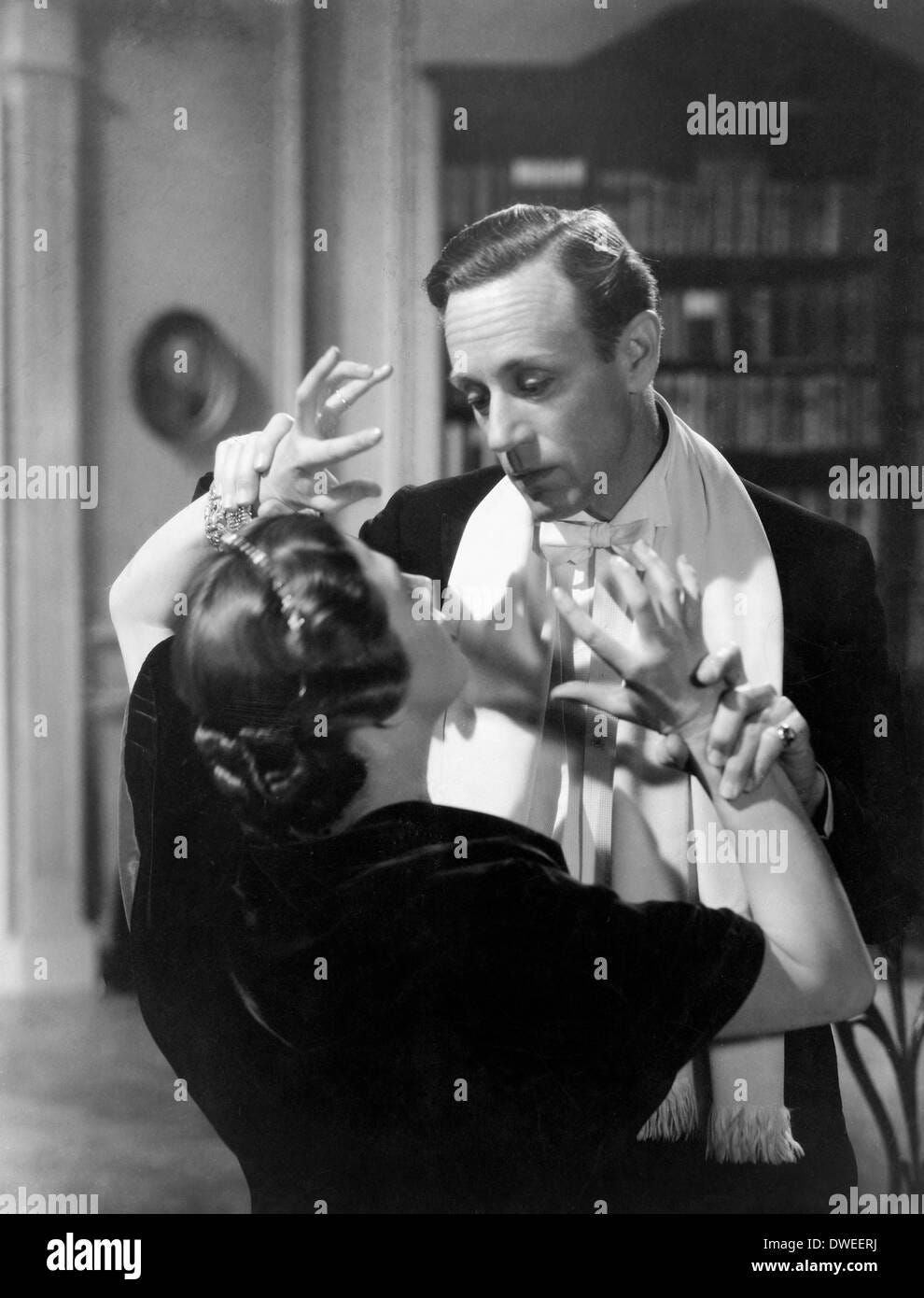
Leslie Howard in Pygmalion, 1938.
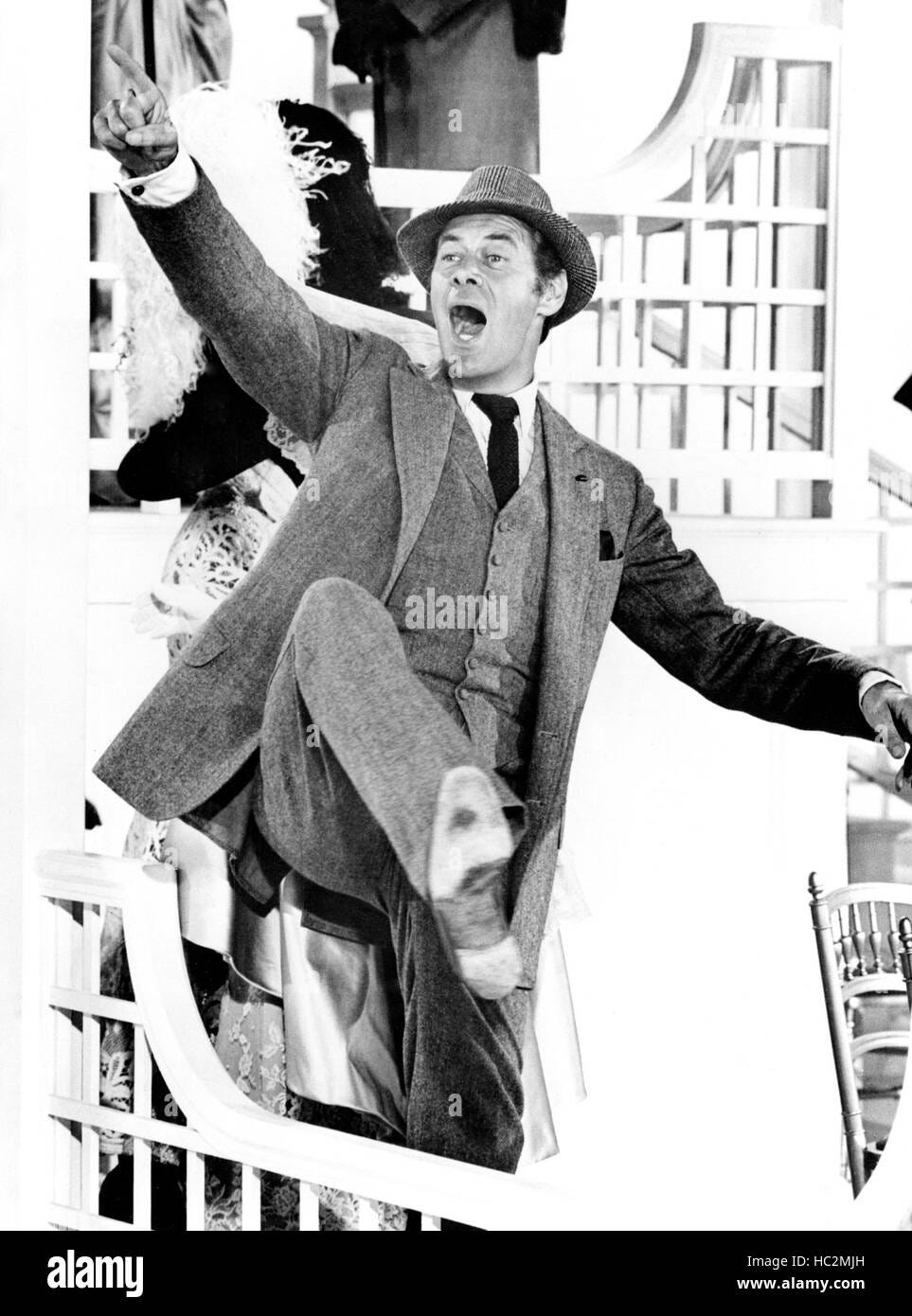
Rex Harrison in My Fair Lady, 1964.
I recently reread Shaw’s Pygmalion for the first time in forever, and no wonder the smart money thought once upon a time it’d be a good idea to turn it into a goddamned musical. The setup moves like greased lightning, the characters delineate their basic traits – the only kind the male ones own, although Eliza, mère Higgins, and Mrs. Pearce the housekeeper all suit the author’s priorities by having more dimensionality – as punchily as telegrams from A.A. Milne’s Tigger, and the whole thing shuttles to its multiple destinations more briskly than the jim-dandiest toy train. I can’t think offhand of a playwright better than Shaw at making his thesis points entertaining.
Thesis points? Sure, kids – all the crapola Alan Jay Lerner and Frederick Loewe recognized My Fair Lady could do without. What they foregrounded was a story Broadway audiences could get behind, since they’d gotten behind it before (The King And I) and would again (The Sound of Music). Namely, a winsome person from an alien culture showing up in somebody else’s comfy same old-same old and simultaneously getting smacked with and charmingly gifting a golly-geez Education, right up the gumstump.
So far as L & L’s theatrical betters Rodgers and Hammerstein are concerned, I’ve always been bemused by how blatantly they pilfered The King And I to “create” an even bigger hit a few years later. Governess, governess: this time she doesn’t have to be British; she can be a nun. Can’t do a royal court again, so let’s try an autocratic Kraut killjoy who rules his brood with the steel monocle he’s clutching in his iron fist.
Captain von Trapp’s terrorized family was about the same size as the population of Siam in 1861, which is nifty. We can even rip off the children’s playlet-within-the-play (an Orientalized Uncle Tom’s Cabin the first time around) by goading those miserable Austro-Hungarian brats’ goodnight to party guests into an avant la lettre “It’s A Small World” routine.
By comparison, devising a surefire moneymaker just by leaving the G (for guile) out of G.B.S. seems like a monument to originality. There is, after all, absolutely no truth to the rumor than Lerner and Loewe swiped the idea from a down-at-heels Teheran tunesmith known as the Shaw of Iran. Never underestimate commercial shrewdness; Pygmalion doesn’t loom that large in Shaw’s robust canon, and it’s hard to picture anyone seizing on Arms And The Man, Mrs. Warren’s Profession, or – God help us, so to speak – St. Joan, my personal favorite of the plays, as eminently suited for crowd-pleasing dough-Martha Raye-mee theatricalization.
I’ve never been especially fond of My Fair Lady, mainly because, with one or two exceptions – “The Rain In Spain,” maybe – I don’t like Lerner and Loewe’s songs much. They’re hearty or wistful or fulsomely lush in a tellingly prefab not-to-say-Pavlovian way, which sure isn’t true of Rodgers and Hammerstein at their Oklahoma! or South Pacific best. Sue me for preferring the quite similar shoddiness of L & L’s Camelot, because I’m a sucker for noble, self-sacrificing cuckoldry.
That beast-with-two-backs-of-all-trades high-school girlfriend of mine, Charlie, you don’t want to hear about it. She used to dramatize her suffering by re-enacting the beheading of Ann Boleyn in bed – minus the executioner, unfortunately – and I swear I’m not making that up. People always think I’m joking when I say she was psycho.
Back to My Fair Lady, yes? My disadvantage, unless it’s my good fortune and I’m too dumb to know it, is that I’ve only seen the ponderous 1964 movie version, most notorious for swapping in Audrey Hepburn, who couldn’t sing (and didn’t – she was dubbed by the ubiquitous Marni Nixon) but was a marquee name, for stage Eliza Julie Andrews, who could but wasn’t.
Not yet, any-hoo. It’s fun to imagine how different Andrews’ career might have been if being 86’ed for My Fair Lady hadn’t made her available for wooing by Walt Disney’s waiting Mary Poppins arms. The best clue to what we missed is her ace performance opposite James Garner in 1965’s The Americanization of Emily, from a Paddy Chayefsky script before Chayevsky began shouting at stray Martians through a bullhorn. She’s not only tart and brainy but, color the former eight-year-old in me astonished, as sexy as a Cheshire cat on a hot tin roof.
As for Audrey, the comedy of casting an actress fabled for her elegant elfin chic – and not exactly renowned for her ability to inhabit a character part, cough cough – as a fishwife-tongued Cockney flower girl is funnier than anything in Singin’ In The Rain, which I realize is no small claim. At least she’s appealing, something costar Rex Harrison couldn’t manage if Bugs Bunny’s life depended on it. Yes, Henry Higgins is a tremendously self-satisfied man, but the real self-satisfaction on display is the actor’s, not the character’s. And guess what? He can’t sing, either.
I will never know whether Stanley Holloway can, because I honestly couldn’t give a rat’s butt. This side of having Alfred Doolittle go transgender, not many stage-to-screen mutations are as drastic as Eliza’s dad’s conversion from “the most original moralist at present in England” – Higgins’s puckish but genuinely admiring Pygmalion appraisal of him – into such a hideous professional Irishman that you wouldn’t be surprised to learn he’s not even Irish when he isn’t gainfully pursuing his vocation.
Since there is chewing scenery and there’s insisting in your contract that the scenery has to be constructed out of 250 pounds of raw steak at every performance, the quality most vividly shared by “With A Little Bit of Luck” and “Get Me To the Church On Time,” Doolittle’s big crowd-pleasing numbers – good God, what crowd? The kind that enjoys watching picadors’ horses get their entrails ripped out in the bullring? – is that they’re so coyly unendurable. As compositions, both songs’ leadenly galumphing rambunctiousness and Mugging Invitational lyrics seem mail-ordered from the Acme anvil company in a Chuck Jones Roadrunner short. Even Wile E. Coyote would pray that this time, for once, the blow will be deadly. Beyond that, one’s left with one’s quiet memories of Victor McLaglen’s skilled underplaying, Thomas Mitchell’s delicate way with a line, and Edmond O’Brien’s stoic refusal to ham things up merely to get the cheap seats’ attention.
Virtually all of Pa Doolittle’s cocky pride in being one of “the undeserving poor” and annoyance at the phony virtuousness thrust on him once he’s trapped into gentility is either wiped away outright or trivialized to the point that the audience can chuckle without having (or needing) to grasp the sardonic thrust of what he’s saying. But that’s a minor lacuna compared to the absence of Eliza’s most Shavian and yet un-Shavian qualities: her sadness and rage. Her anger is reduced to slapstick fantasies about getting her revenge on Higgins; her sorrow just wanders off in discreet search of a character who’d plausibly feel that emotion in a better movie. Mildred Pierce or A Streetcar Named Desire, say.
In Pygmalion, Eliza isn’t just a fetching linguistic specimen. She’s a diverting toy for a pair of upper-crust hobbyists: “You certainly are a pretty pair of babies, playing with your live doll, “ Mrs. Higgins tells her son and Colonel Pickering, and note that she isn’t rebuking them for wickedness, but infantilism. What makes the situation excruciating for Eliza is that she’s brainy enough to know all this, resent it, and yet take pleasure in this life’s perks. She’s closer to Hedda Gabler than Mary Poppins, although she doesn’t kill herself.
Mary, of course, is the one who should have.
The musical’s serene inversion of the play’s values is explicit in Higgins’s opening number. In Shaw, he’s an abstruse scholar-tinkerer absorbed in (and thrilled by his own expertise in decoding) Britain’s astounding variety of accents and argots, with no moral judgment of the class distinctions they define. In Lerner and Loewe, he’s a popinjay exasperated by the lower depths’ mangling of their mother tongue, and L & L are totally on board with this prejudice – which is explained, just like you’re supposed to believe it or something, by Higgins’s desire to improve their lot. He’s secretly selfless, you see. About as selfless as an anaconda, but you can’t have everything.
The movie adds a whole other dimension of privilege porn, most prominently in the lavish costumed set-piece presenting the newly tutored Eliza at the Ascot races. (In the play, her first, much less ooh-and-aah test is mingling with the guests in Mrs. Higgins’s parlor.) Looks like a pretty darn swank way to kill time until you die; it’s unthinkable our gal would criticize this lifestyle, let alone consider rejecting it.
Does all this traducing of Shaw shock, appall, outrage or even bother me? Fiddlesticks. Fiddler on the roofsticks! I think it’s hilarious and, in its way, as instructive about the hierarchies built into oh-so-literally discriminating taste as Pygmalion itself. It’s just rooting for the other side, big deal, and I can’t really get worked up about Pygmalion’s sanctity. If they came for St. Joan, I’d man the barricades, but that’s never going to happen.
Isn’t this a wonderful country? The only comparable odyssey of an artifact through American culture’s meaninglessness-inducing mulch machine I can think of is “Mack The Knife”’s journey from satiric capitalism-parodying ballad in 1928 to snide-hipster Bobby Darin hit in ‘59 to buoyantly context-allergic Ella Fitzgerald remake a year later to – I be dog – 1980s McDonald’s commercial featuring an artificially generated fake Ray Charles. However, Darrin’s heirs were the ones who sued: appropriately enough, too. As Robert Christgau once wrote, Bobby Darrin was always the ultimate rock and roll fink.
Shaw himself supposedly liked 1938’s screen Pygmalion, starring Leslie Howard and Wendy Hiller. Yet despite reaching age 94, the man obviously died too soon. Too soon, that is, to see what Lerner and Loewe’s alchemic vulgarity – the antithesis to his thesis, as good old Fabian Society dialectics would put it -- made of his 1913 play or the Tunes And The Men fortune it made. Don’t you imagine him watching the whole process of appropriation, distortion and strange renewal absolutely bug-eyed with fascination? Meaning Pygmalion/My Fair Lady, obviously, but maybe “Mack The Knife” too.
Some context from one slightly more versed in this universe: R & H first bought the rights to Pygmalion; Stephen Sondheim told an event at Columbia College that he'd always wondered what their version would been like. As a Hammerstein protege, I think his imagination is more on point about how it would have turned out than my possibly less generous vision.
And Arms and the Man WAS adapted into an operetta, The Chocolate Soldier, by Oscar Straus in 1908, under the stipulation that none of the play's dialogue be used and that it be billed as a parody of the play. Shaw, who took no money for the rights, felt free to hate it loudly, especially when it became a lucrative hit.
Somewhere
Lorenz Hart is in a lonely saloon (Sardis) drunk and disapproving, I.e. in heaven. I finally understand what Blue Moon is all about. Hey wouldn’t Gilligan’s wake be great as a musical?